
The drop in net interest margin will separate the men from the boys, explains Tamal Bandyopadhyay.

Shikhar Dhawan's return to competitive cricket proved valiant but futile

Central Bank of India classified its loans to Go First as non-performing assets (NPAs) in the July-September quarter (second quarter, or Q2) of 2023-24 (FY24). The no-frills carrier has been under insolvency proceedings since May 2023 and ceased operating flights on May 3 this year. The public sector lender's exposure, including government-guaranteed emergency credit to the ailing airline, amounts to about Rs 2,000 crore.

'It is observed that some of our branches are already losing good balances in their savings deposits as well as fixed deposits, which are maturing, to the other banks.'

The government may save over Rs 70,000 crore (Rs 700 billion) on capital and revenue expenditure allocated towards new schemes in the FY25 Budget that are yet to be implemented.

The Indian rupee is likely to depreciate further against the US dollar through the end of 2024. This is due to the continued strengthening of the greenback, combined with the weakening of the Chinese yuan, which is expected to keep pressure on the Indian currency.

It won't be easy for the banking sector to better its performance every quarter, predicts Tamal Bandyopadhyay.

The rally in PSBs, analysts feel, was more a knee-jerk reaction to the development, and the actual benefits will start to accrue once the addition takes place in 2024. "The actual benefit for banks from the inclusion in JP Morgan's EM Index will accrue from June 2024 onwards. "Until then, the larger fundamentals of the market will dictate the moves. "Once the initial euphoria subsides, bond markets will look to global cues which may trigger fresh selling," said Siddharth Khemka, head of retail research, Motilal Oswal Financial Services.

Bank of Baroda has posted a net profit of Rs 2543.80 million for the quarter ended December 31, 2002 as compared to Rs 1581.30 million for the quarter ended December 31, 2001.
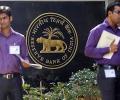
The Reserve Bank of India (RBI) has sought details about lenders' exposures to the Adani Group, banking sources said, a day after the conglomerate withdrew the Rs 20,000-crore follow on public offer (FPO) of its flagship firm Adani Enterprises amid the steep fall in its stock prices. On Wednesday, Swiss lender Credit Suisse stopped accepting bonds by Adani group companies as collaterals for margin lending. The going has been tough for the diversified conglomerate over the past week ever since US-based short seller Hindenburg Research levelled a slew of allegations about the group's operations, calling it the biggest corporate con ever.

Operations of public sector banks (PSBs) may be impacted as bank union AIBEA has given a strike call for Saturday to oppose incessant outsourcing of jobs. Although the officers are not part of the strike, there may be some impact on cash deposit and withdrawal, clearing of cheques etc. Several banks, including Bank of Baroda and Punjab & Sind Bank, have already informed their customers about the potential impact on services if November 19 strike materalises.

At least 13 candidates are in the race for the position of managing director and chief executive officer (MD & CEO) of Punjab National Bank (PNB), the second-largest public sector bank (PSB), according to multiple sources familiar with the matter. "Among the candidates, some are executive directors (EDs) and managing directors in major PSBs. "Financial Services Institutions Bureau (FSIB) will conduct the interviews next month," said a source.

Despite rising interest rates, and high inflation, the banking sector is doing well, on the back of a recovering economy. The last couple of quarters indicate credit demand is picking up and Return on Assets (RoA) is more than acceptable at the moment. The PSU bank pack may be more interesting at the moment simply due to being valued at far lower multiples than the private banks.
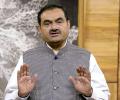
Adani group is on track to surpass a combined Ebitda (earnings before interest, taxes, depreciation, and amortisation) of Rs 1 trillion in the ongoing financial year (FY25) as it prepares for a $2 billion (over Rs 16,700 crore) share sale by its flagship entity Adani Enterprises next month, according to a source close to the matter.

Most lenders that have reported their April-June business update posted slower growth in deposits sequentially as compared to the loan growth in the April-June quarter of 2024-25 (FY25). Current and savings account (CASA) deposits continue to face pressure. Private-sector lenders YES Bank, Bandhan Bank, and RBL Bank saw their deposit growth contract by 0.5 per cent, 1.5 per cent, and 2 per cent, respectively.

After the finance minister directed public sector banks to join the account aggregator (AA) ecosystem, 5-6 major ones, including State Bank of India (SBI) and Bank of Baroda are expected to go live by July-end. Sahmati, an industry alliance for the AA ecosystem, has been working with PSU banks to get them onboarded for quite some time now. So far, Union Bank of India and Punjab National Bank (PNB) have gone live on the AA ecosystem. While Union Bank has been live for a while, PNB went live earlier this month.

Corporate bond issuances fell by around 22 per cent in August, despite easing yields as issuers delayed raising funds awaiting the US Federal Reserve to start cutting interest rates from this month. Corporates and financial institutions expect yields to fall further and borrowing costs to become cheaper, said market participants. The US Fed is widely expected to cut interest rates by 25 bps in the 17-18 September meeting, marking the start of a downward interest rate cycle.

Even as the high inflation figure for October has ruled out any possibility of a rate cut by the Reserve Bank of India's (RBI's) monetary policy committee (MPC) in December, a rate cut in February also looks uncertain due to global uncertainties. Economists told Business Standard that unless domestic growth slows markedly, the outlook on rate cut remains unclear. India's headline inflation touched a 14-month high of 6.2 per cent in October, breaching the MPC's upper tolerance band of 6 per cent.

'The RBI's MPC will maintain the current policy rates (6.50%) at the policy meeting, given ongoing inflationary pressures.'

Gurucharan Singh's Dhawan Creative apparently clocked trades 10 times its capital in a few months.

States are on track of fiscal consolidation with their total borrowings reaching Rs 5 trillion till October, which is 60 per cent of the projected borrowings of Rs 8.38 trillion till December 2024, according to data from official sources. Government officials said the lower-than-projected borrowings by states were a sign of prudent fiscal management by them. States announce their borrowing plans every quarter.
The global turmoil in the banking sector has made analysts cautious, who advise that investors stay away from stocks of this sector till the overall sentiment improves. The recent trouble for the banking sector started with the collapse of US-based Silicon Valley Bank (SVB), Silvergate Capital and Signature Bank. On its part, Moody's Investors Service has also cut its outlook for the US banking system to 'negative' from 'stable', citing the run on deposits at these three banks that led to the collapse of these banking majors in less than a week.

To boost domestic manufacturing under the Make in India initiative and reduce dependency on imports, the government is expected to announce in the Budget an increase in the minimum local content requirement for public procurement, with certain sectors being granted exceptions. Currently, firms producing goods, services, or works with at least 50 per cent local content are classified as Class-I local suppliers and are preferred the most in government procurement.

Following the lacklustre growth numbers in the second quarter (Q2FY25), economists believe the upcoming Union Budget for 2025-26 should focus on reforms that will stimulate consumption, manufacturing and spur employment. India's growth unexpectedly slowed to 5.4 per cent in the second quarter, due to low capital formation, weak consumption, besides adverse weather impact.

The rupee has depreciated by 0.6 per cent so far in the current financial year.

Mining conglomerate Vedanta Limited has received approvals from the majority of its creditors for a proposed demerger of businesses, marking an important step in the company's plan to split into six independent listed companies. "I am happy to let all of you know that we have received the 52 per cent plus the additional percentage, which is required for us to reach 75 per cent. "We have crossed that threshold as well. Most of the lenders have approved it," a senior Vedanta executive said in a recent bondholder conference call.

Amid low growth elsewhere, gross value added (GVA) growth in agriculture and allied activities recovered during the second quarter of the current financial year (Q2FY25) to 3.5 per cent year-on-year (Y-o-Y) due to strong monsoon. Experts feel that the rains have laid the foundation of an even better GVA performance in subsequent quarters. GVA growth in the first quarter of FY25 was 2.0 per cent.
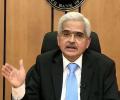
The Reserve Bank is unlikely to cut the benchmark interest rate in its forthcoming bi-monthly monetary policy review later in the week as retail inflation is still a cause of concern, and there is a possibility of the Middle East crisis deteriorating further, impacting crude oil and commodity prices, say experts.

The finance ministry is in favour of extending the August deadline for public sector banks (PSBs) as well as insurance companies to increase their minimum public shareholding (MPS) to the mandated 25 per cent, said a senior government official. "The election results will determine the course of action. "Most likely, those who did not receive an extension to meet the minimum shareholding norm will be granted one," the senior government official said.

In the biggest consolidation exercise in the banking space, the government on Friday announced four major mergers of public sector banks, bringing down their total number to 12 from 27 in 2017, a move aimed at making state-owned lenders global sized banks.

Not all public sector banks are back in the black, but their collective net profit for the year is Rs 32,346 crore against a Rs 9,013 crore loss in the previous year, points out Tamal Bandyopadhyay.

The three day MPC meeting began on Monday and the decision will be announced on Wednesday by RBI Governor Shaktikanta Das.

While the collapse of a large financial intermediary can wreak havoc on the system because of the interconnectivity, a large business conglomerate too can play spoilsport if the banks have too much exposure to the entity, explains Tamal Bandyopadhyay.

The US Fed interest rate decision, ongoing quarterly earnings, macroeconomic data and FII trading activity are the major triggers that will drive stock markets this week, analysts said. Investors would also track global market trends and the movement in global oil prices for further cues. "This week, the focus will shift to global cues, particularly the US markets," Santosh Meena, Head of Research, Swastika Investmart Ltd said.

The government does not seem keen on issuing fresh gold bonds given the overall cost and rising gold prices.
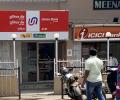
The annual earnings of a non-executive chairman of a PSB is capped at Rs 10 lakh, inclusive of fees for attending board meetings. This is way below the compensation of the chairman of any private bank, reveals Tamal Bandyopadhyay.

It will be the second Budget of the Modi 3.0 government and eighth straight Budget for Nirmala Sitharaman, rare in Indian polity.

A day after the Reserve Bank of India's (RBI's) Monetary Policy Committee hiked the policy repo rate by 50 basis points (bps), several commercial banks, including ICICI Bank and Bank of Baroda, raised their external benchmark-linked loan rates by an equal amount on Thursday. HDFC, the country's largest mortgage lender, too, increased its interest rates on housing loans by another 50 bps. In total, it has raised rates by 85 bps since May 4, when the RBI had increased the repo rate by 40 bps in an off-cycle meeting.
With concern on food inflation ebbing with the monsoon progressing well, the Reserve Bank of India (RBI) is warming up to the idea of a change in stance to "neutral" from "withdrawal of accommodation", according to economists. In his speech on Thursday during the annual event of the Federation of Indian Chambers of Commerce and Industry-Indian Banks' Association, RBI Governor Shaktikanta Das said: "The balance between inflation and growth is well-poised."

The Centre should privatise all public sector banks (PSBs), except the State Bank of India (SBI). This is because private banks have emerged as a credible alternative to PSBs with substantial market share. Also, government ownership hinders the ability of the Reserve Bank of India (RBI) to regulate the sector, according to a report by the National Council of Applied Economic Research (NCAER).
